
Free Book / Audiobook / Book Series Schema Markup Generator — JSON-LD for Google, AI Search & Book Discovery
Books are among the most searched-for things on the internet. Readers search for a title they heard about on a podcast. Parents look for the next book in their child’s favourite series. Students track down a specific edition of a textbook. Commuters ask voice assistants to recommend an unabridged audiobook for a long journey. Librarians look up which volumes belong to a series before placing an order.
Behind every one of those searches is an opportunity — for publishers, authors, booksellers, libraries, and book platforms to appear with authority, precision, and the right information at exactly the right moment. Structured data is what makes that possible.
This free Book / Audiobook / Book Series Schema Markup Generator creates valid, Schema.org V30.0 compliant JSON-LD for all three publishing content types in seconds. Whether you’re marking up an individual book edition, a spoken-word audio production, or an entire series entity that groups multiple titles — this is the only generator that handles all three in one place, built from the official Schema.org specifications and Google’s Book Actions documentation.
No developer. No plugin. No prior technical knowledge required. Enter your details, generate your schema, validate it, and implement it on your page.
Generate Book, Audiobook & Series Schema — Make Every Title Discoverable on Every Platform: Create structured data for print editions, audio productions, and complete series entities. JSON-LD that search engines, AI recommendation platforms, and library systems can parse with precision. Free. No signup. All three schema types in one tool. Generate My Book Schema →
How To Use
Select the mode (Book, Audiobook, or Book Series), fill in the required fields, and generate your schema.
Generated Schema
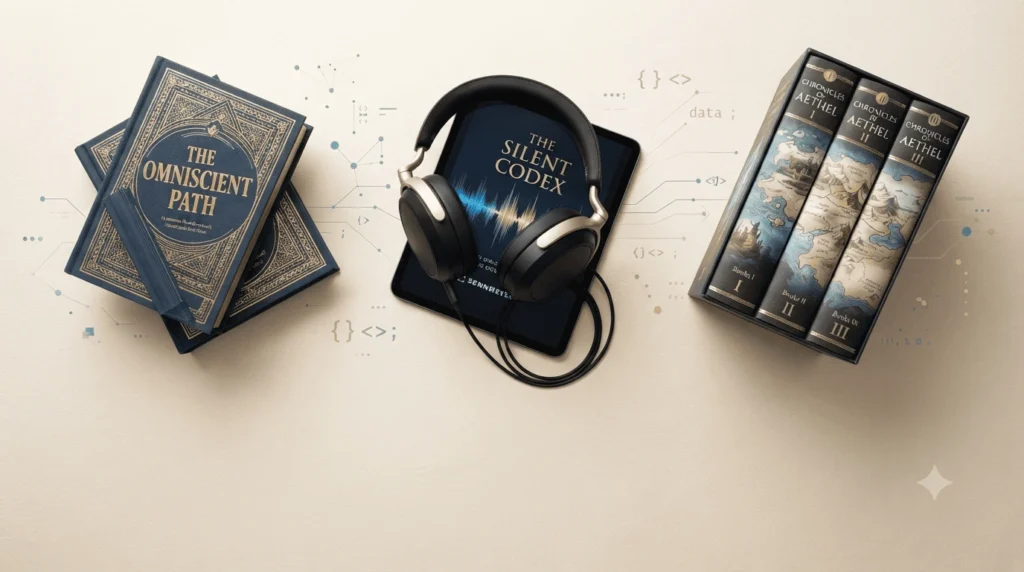
Three Schema Types in One Generator — Book, Audiobook, and Book Series
Most book schema generators handle only one type. This generator handles all three that matter for publishing SEO — and understanding the difference between them is the first step to getting your implementation right.
1. Book Schema — Individual Editions
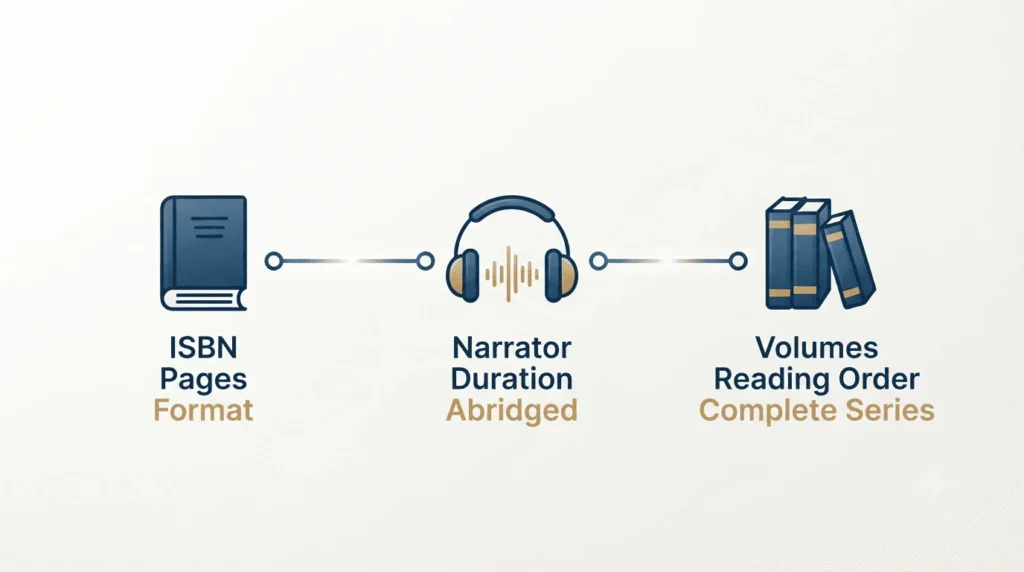
The Book type at schema.org/Book describes a specific edition of a written work — a hardcover novel, a paperback reference guide, an ebook edition, a graphic novel, a children’s picture book. Each edition is its own entity with its own ISBN, format, page count, publisher, and publication date.
Use Book schema for: Any individual book edition page — publisher catalogue entries, bookshop product pages, review pages about a specific edition, author bibliography pages.
The inheritance chain is Thing > CreativeWork > Book. This means every Book schema block inherits the full creative work property set — author, publisher, publication date, language, genre, ratings, reviews, awards, copyright — plus the book-exclusive properties: isbn, bookFormat, bookEdition, numberOfPages, illustrator, and abridged.
2. Audiobook Schema — Spoken Word Editions
Audiobook is a direct subtype of Book — it inherits every Book property and adds three audio-specific ones that don’t exist on the parent type:
readBy — The narrator(s) as Person entities. In the audiobook world, narrator choice is as significant a purchase factor as the author’s name. A badly narrated audiobook is returned; a brilliantly performed one earns five stars. Making the narrator machine-readable helps AI recommendation platforms answer “find me an audiobook narrated by [narrator name]” queries.
duration — The total running time of the audio production in ISO 8601 duration format (PT12H34M = 12 hours 34 minutes). Running time is the primary practical consideration for audiobook buyers — does this fit a road trip? a daily commute? a week of walking? Declaring it in structured data makes it searchable and filterable.
abridged — Boolean: true for condensed versions, false for complete productions. Audiobook buyers feel strongly about this. Many will only buy unabridged versions; others actively prefer condensed. Always declare it explicitly — never leave it blank.
Use Audiobook schema for: Any dedicated audiobook edition page. If you sell both print and audio editions, give each its own page with its own schema block.
3. BookSeries Schema — The Series Entity Itself
This is the type that most publishing sites completely miss — and it’s the one with the most significant AI search value in 2026.
BookSeries is defined at schema.org/BookSeries as a subtype of CreativeWorkSeries. It describes the series as a unified entity — not any individual book within it, but the series itself as a creative and commercial concept.
The inheritance chain: Thing > CreativeWork > CreativeWorkSeries > BookSeries
A BookSeries entity ties together:
- The series name and concept (e.g. “A Song of Ice and Fire”, “The Chronicles of Narnia”, “Discworld”)
- The author and their creative role across the series
- The genre and theme that defines the whole series
- The complete list of volumes via
hasPart - The start date of the series and (for completed series) the end date
- The total number of volumes
When a reader asks an AI assistant “what order do I read the Wheel of Time series in?” or “how many books are in the Discworld series?” or “is the Stormlight Archive finished yet?” — the answer comes from structured series data. Publishers and fan sites that have implemented BookSeries schema are far more likely to be the source those AI platforms cite.
Use BookSeries schema for: A dedicated series page that groups all books in a series together. Publisher series landing pages, author series pages, fan wiki series overview pages, and book club series guides are all ideal homes for BookSeries schema.
The Critical Two-Layer Strategy for Book Publishers
Before you add any schema to your pages, understand how these two systems work together — because conflating them is the most consequential Book schema mistake publishers make.
Layer 1: On-Page JSON-LD (What This Generator Creates)
Standard Book, Audiobook, and BookSeries JSON-LD placed in the <head> of individual web pages. This is what every publisher, author, bookseller, library, and book platform needs. It requires no Google partnership, no feed submission, no approval process. Generate the schema, paste it into your page, validate it, done.
On-page schema contributes to Google’s entity knowledge of your books, AI platform citations and recommendations, review rich results when combined with aggregateRating, voice search responses, and Knowledge Panel data for books, authors, and series.
Layer 2: Google Book Actions Feed (Requires Google Partnership)
A completely separate system. Book Actions enables “Buy” or “Borrow” action buttons to appear directly in Google Search knowledge panels. It requires creating structured data feeds — .json files containing your full inventory — hosted securely and submitted to Google. It also requires Google approval, and the programme is limited to providers with a wide selection of available books.
Book actions make Google Search an entry point to discover books and authors, enabling users to quickly buy or borrow books directly from search results. This sounds compelling — but it’s designed for major retailers and library management systems with large-scale inventories, not for independent publishers or author websites.
If you’re a publisher, author, bookshop, or review site — Layer 1 is what you need. This generator builds Layer 1. For Layer 2, see Google’s Book Actions feed documentation directly.
What Is Book Schema Markup? The Complete Property Reference
Book-Exclusive Properties
These six properties exist only on the Book type (and its subtypes). They’re what makes Book schema specifically useful rather than just using the generic CreativeWork type.
isbn — The International Standard Book Number. ISBN-13 format preferred: 13 digits beginning with 978 or 979, no hyphens. This is the most important field in the entire schema block — it is the globally unique identifier that links your page to every book database, library catalogue, bookselling API, and AI knowledge system in the world. Never omit it for commercial editions. Format: "isbn": "9780571258246".
bookFormat — The format, declared using Schema.org’s BookFormatType enumeration URLs:
https://schema.org/Hardcover— hardback editionshttps://schema.org/Paperback— standard paperback / trade paperbackhttps://schema.org/Pocket— mass market paperback (smaller format)https://schema.org/EBook— digital editions (EPUB, Kindle, PDF)https://schema.org/AudiobookFormat— audio editions (use withAudiobooktype)https://schema.org/GraphicNovel— graphic novel / comic book album format
Always use the full URL form — https://schema.org/Hardcover, not just "Hardcover". Machines parse enumeration URLs reliably; bare text strings are interpreted inconsistently.
bookEdition — Edition name as text: “First Edition”, “Revised and Updated Edition”, “Anniversary Edition”, “International Student Edition”, “Annotated Edition”. Critical for academic and reference books where edition matters for course requirements and citations.
numberOfPages — Page count as an integer. Helps AI systems answer “how long is this book?” and allows platforms to filter by length. For ebooks where pagination varies by font size and device, use the print equivalent.
illustrator — The illustrator as a Person entity with name and optionally url. For children’s picture books, illustrated non-fiction, and graphic novels, the illustrator is a primary creative contributor and a significant purchase decision factor.
abridged — Boolean: true for condensed versions, false for complete editions. Particularly important for audiobooks but also applies to abridged print editions of long works. Always declare explicitly.
Key Inherited CreativeWork Properties
name — The full title including subtitle: “The Hitchhiker’s Guide to the Galaxy” or “Thinking, Fast and Slow” — exactly as it appears on the cover.
author — The author as a Person object with name, url (their official site), and sameAs (Wikipedia/Wikidata links). Multiple authors use an array. The sameAs links are critical — they connect the author entity on your page to their established entity in Google’s knowledge graph.
publisher — Publishing house or imprint as Organization with name and url. For self-published titles: the author’s own imprint name, not “Amazon KDP” or “Ingram”.
datePublished — First publication date for this edition in ISO 8601 format: "2021-09-14". For classic literature, the year alone is valid: "1813" for Jane Austen’s Pride and Prejudice.
inLanguage — The language of this edition using IETF BCP 47 codes: "en", "fr", "de", "ar", "es". For bilingual or multilingual works, use an array.
genre — The literary genre as text: “Literary Fiction”, “Science Fiction”, “Fantasy”, “Crime Thriller”, “Self-Help”, “Academic Economics”, “Children’s Picture Book”. Use the genre terms readers actually search for, not internal catalogue classifications.
description — A factual, informative summary of the book’s content — 100 to 250 words. Write for an AI system that needs to understand what this book is about and who it’s for. Marketing superlatives (“unputdownable!”, “a masterpiece of our time”) are useless for structured data. Write what the book is, what themes it explores, who the characters are, what the reader will experience.
image — The URL of the cover image. Use the highest resolution version. Google uses cover images in book Knowledge Panels.
aggregateRating — Compiled reader ratings when displayed on-page. Requires ratingValue, ratingCount, bestRating, and worstRating. Only include if genuine user ratings are visible on the same page.
award — Literary awards as text string or array: “Man Booker Prize 2023”, “Pulitzer Prize for Fiction”, “Carnegie Medal”. Awards are strong entity signals and improve Knowledge Panel generation.
offers — Pricing and purchase availability via Offer object: price, priceCurrency, availability (https://schema.org/InStock etc.), priceValidUntil, and a purchase URL. For booksellers and publishers selling direct, this feeds into product-related search results.
isPartOf — Links an individual book to the BookSeries it belongs to. Use a BookSeries object with name and optionally url. Essential for series fiction — without it, Google and AI platforms have no machine-readable signal about series membership.
position — The book’s place in the series as an integer or text: 1, 2, "Book One". Always pair with isPartOf.
translator — The translator(s) as Person entities. Important for translated literature where the translator’s name is a meaningful quality and readability signal.
typicalAgeRange — For children’s and YA books: “3-6”, “7-9”, “9-12”, “12-16”. One of the most searched-for book attributes by parents and educators.
workExample / exampleOfWork — Links Works to their Editions. A page describing the work-level concept of “Hamlet” uses workExample to point to specific editions. Edition pages use exampleOfWork to point back.
BookSeries Schema — The Complete Guide
No other part of Book structured data is as underimplemented or as valuable for AI search as BookSeries schema. This section covers everything you need to know about the type most publishing sites haven’t discovered yet.
What Is BookSeries Schema?
BookSeries is defined at schema.org/BookSeries as a subtype of CreativeWorkSeries. It describes a series of books — not an individual volume, but the collective entity that connects all the volumes under a shared identity.
Think of the difference like this: the Book type answers “what is this specific volume?” The BookSeries type answers “what is the whole series?” Both are needed. A reader looking at Book 3 of a fantasy series needs the volume schema to understand that book. A reader who just discovered the series and wants to know where to start, how many books there are, and whether it’s finished needs the series schema.
BookSeries Properties
name — The series name as a text string: “A Song of Ice and Fire”, “Discworld”, “The Wheel of Time”, “Horatio Hornblower”. Use the name exactly as it’s commercially known.
description — A factual summary of the series as a whole — not any single book, but the overarching narrative, world, or theme that connects the volumes. “A multigenerational fantasy series set in the medieval-inspired continent of Westeros…” This is what AI systems quote when answering series-level discovery questions.
author — The series author as a Person entity with name, url, and sameAs. For series with multiple authors (collaborative series, series continued by a different author), use an array.
url — The canonical URL of the series landing page. This becomes the primary web reference for the series entity.
image — A representative image for the series — often a composite of covers, a series logo, or the most recognisable volume cover.
startDate — The publication date of the first volume as a year or ISO 8601 date: "1996" or "1996-08-01".
endDate — The publication date of the final volume, if the series is complete. Omit for ongoing series. This is the structured data answer to “is this series finished?” — one of the most commonly asked questions about long-running fantasy and sci-fi series.
numberOfVolumes — Total number of books in the series as an integer. For ongoing series, this reflects the current count and should be updated as new volumes are published.
hasPart — The individual Book entities that make up the series, each listed with at minimum name, position, and ideally isbn and url. This is the structured data equivalent of a reading order guide — and it’s what allows AI platforms to give confident, accurate reading order answers.
genre — The series genre(s). Series often span sub-genres; include the primary genre at minimum.
inLanguage — The original language of the series.
keywords — Thematic keywords that describe the series: “epic fantasy”, “dragons”, “political intrigue”, “coming of age”, “space opera”, “hard sci-fi”.
award — Series-level awards: “Hugo Award for Best Series”, “British Fantasy Award for Best Series”.
Who Needs These Three Schema Types?
Publishers — Independent and Major
Every title page on a publisher’s site needs Book schema with the correct edition ISBN, format, and pricing. Series landing pages need BookSeries schema. Audiobook edition pages need Audiobook schema. For publishers with large catalogues, generate all three types server-side from the title management database.
Authors — Self-Published and Traditionally Published
Author websites benefit from all three types simultaneously. Book schema on individual title pages, Audiobook schema on any audio edition pages, and BookSeries schema on series overview pages. The combination creates a complete entity graph that Google and AI platforms can use to answer any question about the author’s work — including questions the author hasn’t anticipated.
Online Booksellers and Independent Bookshops
Book schema on product pages, with the correct edition ISBN, format, and live pricing via offers. For bookshops that also sell audiobooks, Audiobook schema on those product pages. For shops with curated series recommendations, BookSeries schema on series guide pages.
Libraries and Library Management Systems
Libraries benefit most from Book schema (for individual catalogue entries), Audiobook schema (for audio holdings), and BookSeries schema (for series catalogue pages that help patrons understand what order to read titles in). The BorrowAction via Google Book Actions is the library-specific extension for platforms with large enough holdings.
Book Review Sites and Literary Magazines
Review pages benefit from Book schema combined with Review and AggregateRating Schema markup — creating fully structured review entities. Review sites that cover series benefit from BookSeries schema on their series overview pages.
Audiobook Platforms and Podcast Publishers
Audiobook schema is purpose-built for this audience. The readBy (narrator), duration, and abridged fields directly answer the practical questions audiobook consumers ask before purchasing or borrowing.
Fan Wikis and Book Club Sites
BookSeries schema is particularly valuable here — fan wikis and reading guides are often the most comprehensive series information resources available online. Marking up series entities on these pages creates authoritative structured data that AI platforms can cite when answering series questions.
Your Catalogue Deserves Complete Structured Data — Not Just a Title and Author: Book schema for editions. Audiobook schema for audio productions. BookSeries schema for series entities with reading order. Generate all three types from one generator, free. Build My Publishing Schema Free →
How to Use the Book / Audiobook / Book Series Schema Generator
For Book Schema
Step 1: Select Book as your schema type.
Step 2: Enter the full title including subtitle. Enter the ISBN-13 without hyphens.
Step 3: Select the bookFormat from the dropdown — Hardcover, Paperback, EBook, GraphicNovel, or Pocket.
Step 4: Add the bookEdition text if applicable. Enter numberOfPages.
Step 5: Add author details: name, URL, and any sameAs links to Wikipedia or Wikidata.
Step 6: Add publisher name and URL. Add datePublished in YYYY-MM-DD format.
Step 7: Select language, enter genre, and write a factual description.
Step 8: If the book is in a series, add isPartOf (series name) and position (series number).
Step 9: Add aggregateRating if ratings are displayed on-page. Add offers if you sell the book direct.
Step 10: Generate, validate at validator.schema.org, implement in <head>.
For Audiobook Schema
Step 1: Select Audiobook as your schema type.
Step 2: Enter the title, ISBN (the audiobook’s own ISBN — different from the print edition), and set bookFormat to AudiobookFormat.
Step 3: Add the narrator(s) via the readBy field as Person entities.
Step 4: Enter the total runtime. The generator converts your hours/minutes input to ISO 8601 duration format (PT12H34M) automatically.
Step 5: Set abridged to true or false explicitly. Never leave this blank for audiobooks.
Step 6: Add author, publisher (the audio publisher, which may differ from the print publisher), and datePublished for this audio edition.
Step 7: Add description, genre, language, and any aggregateRating.
Step 8: Generate, validate, implement.
For BookSeries Schema
Step 1: Select BookSeries as your schema type.
Step 2: Enter the series name exactly as it’s commercially known.
Step 3: Write a series-level description — this should describe the whole series, not any individual volume.
Step 4: Add the series author with name, url, and sameAs links.
Step 5: Enter startDate (year the first book was published) and endDate if the series is complete.
Step 6: Enter numberOfVolumes — the total number of books in the series.
Step 7: Add each volume to the hasPart array: title, series position, ISBN (if available), and URL.
Step 8: Add series genre, keywords, and any series-level award.
Step 9: Generate, validate, implement on your series landing page.
How to Add Schema to Your Website
All three schema types use the same implementation method: a <script type="application/ld+json"> block placed in the <head> section of the relevant page. Each schema type goes on its own type-appropriate page — Book on book edition pages, Audiobook on audiobook edition pages, BookSeries on series overview pages.
WordPress: Use the free WPCode plugin to add JSON-LD on individual pages or post types without editing theme files. Set display rules per page type.
Shopify: Edit templates/product.liquid and inject Book or Audiobook schema dynamically using Liquid variables from your product data. For series pages, use a page template.
Squarespace: Use Page Settings → Advanced → Page Header Code Injection on each individual book, audiobook, or series page.
Wix: Go to Settings → Custom Code → Add Custom Code → Head, targeting specific pages.
Publisher CMS: Generate all three schema types server-side from your title management database. Populate Book and Audiobook schema dynamically per edition record, and BookSeries schema from your series data table.
Library CMS (Koha, Evergreen): Inject Book JSON-LD via the OPAC template, populating from MARC fields (ISBN from 020, language from 041, page count from 300). BookSeries schema can be added to series landing pages created in the OPAC.
Complete JSON-LD Examples — All Three Schema Types
Example 1: Book Schema (Hardcover Literary Novel)
					<script type="application/ld+json">
{
  "@context": "https://schema.org",
  "@type": "Book",
  "name": "Demon Copperhead",
  "isbn": "9780063251304",
  "bookFormat": "https://schema.org/Hardcover",
  "bookEdition": "First Edition",
  "numberOfPages": 560,
  "abridged": false,
  "description": "Set in the mountain communities of southern Appalachia, Demon Copperhead follows a boy born to a teenage single mother in a Virginia trailer park who navigates foster care, rural poverty, addiction, and survival. A contemporary retelling of David Copperfield by Charles Dickens, set against the backdrop of the opioid crisis in America.",
  "image": "https://example.com/demon-copperhead-cover.jpg",
  "author": {
    "@type": "Person",
    "name": "Barbara Kingsolver",
    "url": "https://www.kingsolver.com",
    "sameAs": [
      "https://en.wikipedia.org/wiki/Barbara_Kingsolver",
      "https://www.wikidata.org/wiki/Q232658"
    ]
  },
  "publisher": {
    "@type": "Organization",
    "name": "HarperCollins",
    "url": "https://www.harpercollins.com"
  },
  "datePublished": "2022-10-18",
  "inLanguage": "en",
  "genre": ["Literary Fiction", "Contemporary Fiction"],
  "award": "Pulitzer Prize for Fiction 2023",
  "isPartOf": null,
  "aggregateRating": {
    "@type": "AggregateRating",
    "ratingValue": 4.5,
    "bestRating": 5,
    "worstRating": 1,
    "ratingCount": 42819
  },
  "offers": {
    "@type": "Offer",
    "price": 22.99,
    "priceCurrency": "USD",
    "availability": "https://schema.org/InStock",
    "url": "https://example.com/books/demon-copperhead"
  }
}
</script>
Example 2: Audiobook Schema (With Narrator and Duration)
					<script type="application/ld+json">
{
  "@context": "https://schema.org",
  "@type": "Audiobook",
  "name": "Project Hail Mary",
  "isbn": "9780593346365",
  "bookFormat": "https://schema.org/AudiobookFormat",
  "abridged": false,
  "duration": "PT16H10M",
  "description": "Ryland Grace wakes alone on a spaceship with no memory of who he is or how he got there. He slowly remembers that he was sent on a one-way mission to save Earth from an extinction-level threat — a mysterious organism consuming the Sun's energy. A hard science fiction novel of survival, discovery, and first contact.",
  "image": "https://example.com/project-hail-mary-audio-cover.jpg",
  "author": {
    "@type": "Person",
    "name": "Andy Weir",
    "url": "https://andyweirauthor.com",
    "sameAs": "https://en.wikipedia.org/wiki/Andy_Weir"
  },
  "readBy": {
    "@type": "Person",
    "name": "Ray Porter"
  },
  "publisher": {
    "@type": "Organization",
    "name": "Audible Studios",
    "url": "https://www.audible.com"
  },
  "datePublished": "2021-05-04",
  "inLanguage": "en",
  "genre": ["Science Fiction", "Hard Science Fiction"],
  "aggregateRating": {
    "@type": "AggregateRating",
    "ratingValue": 4.8,
    "bestRating": 5,
    "worstRating": 1,
    "ratingCount": 98734,
    "reviewCount": 52109
  }
}
</script>
Example 3: BookSeries Schema (Fantasy Series With Volume List)
					<script type="application/ld+json">
{
  "@context": "https://schema.org",
  "@type": "BookSeries",
  "name": "The Stormlight Archive",
  "url": "https://example.com/series/stormlight-archive",
  "image": "https://example.com/stormlight-archive-series.jpg",
  "description": "An epic fantasy series set on the storm-ravaged world of Roshar, where ancient forces known as the Voidbringers threaten humanity, and a small group of warriors must rediscover the lost powers of the Knights Radiant to survive. Known for its deeply developed magic system, massive scope, and detailed worldbuilding. Part of Brandon Sanderson's broader Cosmere universe.",
  "author": {
    "@type": "Person",
    "name": "Brandon Sanderson",
    "url": "https://www.brandonsanderson.com",
    "sameAs": [
      "https://en.wikipedia.org/wiki/Brandon_Sanderson",
      "https://www.wikidata.org/wiki/Q975223"
    ]
  },
  "startDate": "2010",
  "inLanguage": "en",
  "genre": ["Epic Fantasy", "Fantasy Fiction"],
  "keywords": ["Cosmere", "Knights Radiant", "Shardblades", "worldbuilding", "epic fantasy"],
  "award": "Hugo Award Nominee for Best Series",
  "hasPart": [
    {
      "@type": "Book",
      "name": "The Way of Kings",
      "position": 1,
      "isbn": "9780765326355",
      "url": "https://example.com/books/the-way-of-kings"
    },
    {
      "@type": "Book",
      "name": "Words of Radiance",
      "position": 2,
      "isbn": "9780765326362",
      "url": "https://example.com/books/words-of-radiance"
    },
    {
      "@type": "Book",
      "name": "Oathbringer",
      "position": 3,
      "isbn": "9780765326379",
      "url": "https://example.com/books/oathbringer"
    },
    {
      "@type": "Book",
      "name": "Rhythm of War",
      "position": 4,
      "isbn": "9780765326386",
      "url": "https://example.com/books/rhythm-of-war"
    },
    {
      "@type": "Book",
      "name": "Wind and Truth",
      "position": 5,
      "isbn": "9780765326393",
      "url": "https://example.com/books/wind-and-truth"
    }
  ]
}
</script>
Breaking down the BookSeries-specific fields:
startDate: "2010" — The year the first book was published. An ongoing series doesn’t need an endDate. A completed series does — it tells AI systems the definitive answer to “is this series done?”
numberOfVolumes: 5 — The confirmed count. For ongoing series, this updates as new volumes release. Keep it current.
hasPart array — Each book in the series as its own Book entity. The position property is the reading order signal — it’s what allows AI systems to answer “what order do I read the Stormlight Archive in?” with confidence and precision.
keywords — Series-level thematic keywords go here, not per-volume. They describe what makes this series distinctive within its genre.
Example 4: Children's Picture Book With Illustrator
					<script type="application/ld+json">
{
  "@context": "https://schema.org",
  "@type": "Book",
  "name": "The Gruffalo",
  "isbn": "9780333710937",
  "bookFormat": "https://schema.org/Hardcover",
  "numberOfPages": 32,
  "abridged": false,
  "description": "A small mouse walks through a dark wood and cleverly outwits a fox, an owl, and a snake by inventing a terrifying creature called the Gruffalo — only to discover the Gruffalo is real.",
  "image": "https://example.com/gruffalo-cover.jpg",
  "author": {
    "@type": "Person",
    "name": "Julia Donaldson",
    "url": "https://www.juliadonaldson.co.uk"
  },
  "illustrator": {
    "@type": "Person",
    "name": "Axel Scheffler",
    "url": "https://www.axelscheffler.com"
  },
  "publisher": {
    "@type": "Organization",
    "name": "Macmillan Children's Books",
    "url": "https://www.panmacmillan.com"
  },
  "datePublished": "1999-01-01",
  "inLanguage": "en",
  "genre": "Children's Picture Book",
  "typicalAgeRange": "3-7",
  "isFamilyFriendly": true,
  "audience": {
    "@type": "EducationalAudience",
    "audienceType": "Children"
  }
}
</script>
Get Production-Ready JSON-LD Like These Examples for Every Title, Edition, and Series : Four real examples — literary fiction hardcover, sci-fi audiobook with narrator, epic fantasy series with reading order, and a children’s picture book with illustrator. Every format. Every use case. Try the Generator →
Book vs Audiobook vs BookSeries — When to Use Which
This is the question that causes the most implementation confusion, and the answer is actually straightforward once you frame it correctly.
Ask: what does this page primarily describe?
If the page describes a specific printed or digital edition — a hardcover you can buy, a paperback you can review, an ebook you can download — use Book.
If the page describes a specific audio production — an audiobook with a named narrator and a defined running time — use Audiobook. Even if the underlying text is the same as a print edition you’ve already marked up, the audiobook edition gets its own schema block because it is a different product with its own ISBN and its own consumer-relevant attributes.
If the page describes an entire series as a unified entity — a series overview page, a series guide, a series listing — use BookSeries. This is not the right type for a page about Book 3 in a series; that gets Book schema with isPartOf pointing to the series.
Can you use more than one on the same page? Generally, avoid it. Each type is designed for its own dedicated page. A page that tries to be simultaneously a book edition page and a series overview page is confusing for users and for structured data — split them into separate pages and give each its own schema.
The ISBN — Why It Anchors Everything
No other field carries as much structural weight in Book schema as the ISBN. Here is the complete picture of why.
The ISBN is a universal entity anchor. An author name might match dozens of people. A title might apply to hundreds of books across history. But an ISBN-13 identifies one specific edition of one specific book in every library, retailer, and database in the world simultaneously. When your schema includes a valid ISBN-13, you’re creating a cross-referenced entity record that Google can verify against Google Books, that AI systems can match to Goodreads, Open Library, WorldCat, and national library catalogues, and that bookselling APIs can use to pull accurate metadata.
Different editions have different ISBNs. The hardcover, paperback, ebook, and audiobook of the same title all have different ISBNs. The UK and US editions have different ISBNs. A revised edition has a different ISBN from the first. Each gets its own schema block with its own ISBN.
ISBN-13 is the current standard. Since 2007, all new ISBNs use the 13-digit format beginning with 978 or 979. For books with only ISBN-10 (pre-2007 publications), convert to ISBN-13 or use the ISBN-10 directly. Google’s Book Actions documentation explicitly states it does not accept ISBN-10 — for on-page schema, ISBN-13 is also the recommended format.
Strip hyphens. "isbn": "9780571258246" is preferred over "isbn": "978-0-571-25824-6". Some parsing systems mishandle hyphenated ISBNs.
BookSeries and AI Search — The Growing Opportunity
Series fiction fans are some of the most engaged and most AI-search-active book readers in the world. The questions they ask AI assistants are exactly the kind that structured BookSeries data answers:
“In what order do I read Terry Pratchett’s Discworld series?” “How many books are in Patrick Rothfuss’s Kingkiller Chronicle?” “Is Robert Jordan’s Wheel of Time series complete?” “What’s the first book in Robin Hobb’s Realm of the Elderlings?”
These queries have definitive factual answers — and AI platforms like Google’s AI Overviews, ChatGPT Search, and Perplexity need structured, authoritative data to answer them confidently. Publisher series pages, author series pages, and fan reference sites that implement BookSeries schema with hasPart, numberOfVolumes, and startDate/endDate are positioned to be the cited sources for these answers.
For publishers of long-running fantasy, science fiction, romance, and children’s series — BookSeries schema is currently underimplemented across the board. There is first-mover advantage available right now for any publisher who builds comprehensive series entity pages with proper schema.
Common Mistakes Across All Three Schema Types
Using only title and author for Book schema. At minimum, include isbn, bookFormat, publisher, datePublished, and inLanguage. A two-field schema block provides almost no value.
Using text strings for bookFormat instead of Schema.org URLs. "Hardcover" (text) is significantly less reliable than "https://schema.org/Hardcover" (URL). Always use the full enumeration URL.
Leaving abridged blank on audiobooks. This is the most important audiobook field after duration and readBy. Declare it explicitly — always. A missing abridged field forces AI systems to treat the edition’s status as unknown.
Using the wrong duration format for audiobooks. "PT12H34M" is correct ISO 8601 for 12 hours 34 minutes. Not "12:34", not "12 hours 34 minutes", not "P12H34M" (missing the T). This generator converts automatically.
Creating BookSeries schema without a hasPart array. A series schema block without its constituent books is an incomplete entity declaration. Always include the full hasPart volume list with position ordering.
Not updating numberOfVolumes as series release new books. If you declare "numberOfVolumes": 4 and a fifth book releases, your schema is wrong. Use dynamic schema generation from your title database for series that are still publishing.
Adding Book schema to category or listing pages. Book schema describes one specific book. A page showing 20 books should not have a single Book schema block. Individual book edition pages only.
Confusing isPartOf (on the Book) with hasPart (on the BookSeries). From a book’s perspective: “I am part of this series” → isPartOf pointing to the BookSeries entity. From the series’ perspective: “I contain these books” → hasPart listing all volumes.
Frequently Asked Questions
What is a Book / Audiobook / Book Series Schema Markup Generator?
It’s a free online tool that converts your bibliographic data for any of these three publishing content types into valid Schema.org V30.0 JSON-LD structured data. Instead of manually writing nested JSON-LD with correct BookFormatType enumeration URLs, Person entity objects, ISO 8601 duration formats, and hasPart arrays, you fill in a form and receive clean, validated output for whichever schema type your page needs. This generator handles all three types — Book, Audiobook, and BookSeries — in a single tool, making it the only generator you need for a complete publishing structured data strategy.
How is BookSeries schema different from using isPartOf on a Book?
isPartOf on a Book declares that a specific volume belongs to a series — it’s a relationship property that points upward from the book to the series entity. BookSeries schema describes the series entity itself — it’s the landing page for the series as a concept. Both are needed. Each book in a series should have isPartOf pointing to the series. The series itself should have its own dedicated page with BookSeries schema listing all its volumes via hasPart. Think of it as a two-way street: books point up to the series, and the series points down to the books.
What is the difference between the Book type and the Audiobook type?
Audiobook is a specific subtype of Book. It inherits all Book properties but adds three audio-exclusive properties: readBy (the narrator), duration (running time in ISO 8601 format), and abridged (a Boolean). Use Audiobook for any spoken audio edition. The audiobook of a novel has its own distinct ISBN, its own publisher (often the audio publisher, separate from the print publisher), and its own set of consumer-relevant attributes that the print edition doesn’t have. Always give audiobook editions their own pages and their own schema blocks.
Should I mark up the audiobook narrator as readBy or contributor?
Use readBy. The readBy property is defined specifically on the Audiobook type for narrator credit. While contributor (a CreativeWork property) could technically capture the narrator, readBy is the semantically correct and more machine-readable choice. AI systems that answer narrator-specific queries (“find me audiobooks narrated by Julia Whelan”) look specifically for the readBy property.
What is the ISO 8601 duration format for audiobook duration?
ISO 8601 duration format starts with P, uses T to separate date units from time units, H for hours, and M for minutes. For 12 hours 34 minutes: PT12H34M. For 45 minutes: PT45M. For 8 hours exactly: PT8H. The generator accepts hours and minutes as separate number inputs and converts automatically — you never need to write the ISO 8601 format by hand.
Does BookSeries schema help with “what order to read” queries?
Yes — this is its primary AI search value. When you implement BookSeries schema with a correctly ordered hasPart array (each book with its position value), AI platforms have machine-readable reading order data they can cite with confidence. Without this structured data, AI systems have to parse reading order guides from unstructured text — introducing ambiguity and potential errors. With it, a reading order answer is a reliable, structured lookup.
How often should I update BookSeries schema?
Update BookSeries schema whenever a new volume publishes (increment numberOfVolumes, add the new book to hasPart), whenever the series concludes (add endDate), or whenever a new series-level award is won. For ongoing series from active authors, quarterly schema reviews are a reasonable minimum. For completed series, the schema is essentially static and rarely needs updating.
Can I use all three schema types on the same site?
Absolutely — and for most publishing sites, you should. The three types work together: Book schema on each edition page, Audiobook schema on each audio edition page, and BookSeries schema on series landing pages, with isPartOf (on books) and hasPart (on series) cross-linking them into a coherent entity graph. This complete implementation is what gives Google and AI platforms the most accurate, comprehensive picture of your publishing catalogue.
Does Book schema directly improve Google Search rankings?
Structured data doesn’t directly boost ranking positions for competitive organic queries. What it does is make your pages eligible for rich result features (star ratings from aggregateRating), improve Google’s entity confidence about your books and authors (contributing to Knowledge Panel generation), and increase the probability of AI platform citations. The indirect benefits — higher click-through rates from star-enhanced results, more confident AI recommendations, more complete Knowledge Panels — meaningfully improve overall search visibility and qualified traffic over time.
How do I validate all three schema types?
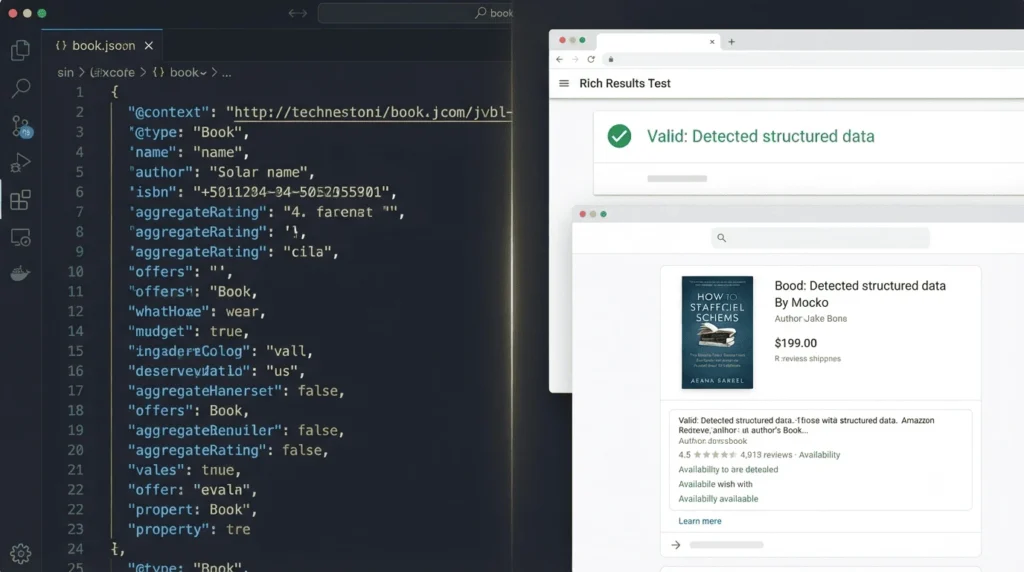
After generating any of the three schema types, paste the JSON-LD into the Schema Markup Validator at validator.schema.org for a full validation against Schema.org V30.0. Run the output through Google’s Rich Results Test at search.google.com/test/rich-results to check which features it qualifies for. After publishing, use the Rich Results status report in Google Search Console to monitor ongoing validity across all your book, audiobook, and series pages.
Why This Is the Only Book Schema Generator That Covers the Complete Publishing Picture
Every other book schema generator online covers one thing: a Book block with title, author, and ISBN. Some add bookFormat. A very small number add aggregateRating. Almost none handle Audiobook schema with proper readBy and ISO 8601 duration. None handle BookSeries schema at all.
The reality of modern publishing is three-dimensional. A single title exists simultaneously as a hardcover, a paperback, an ebook, an audiobook, and a member of a series. Each of those dimensions deserves its own structured data entity, because each dimension is what a different reader is searching for. The reader comparing print editions needs Book schema. The commuter evaluating audiobooks needs Audiobook schema with narrator and runtime. The fantasy fan deciding whether to start a new series needs BookSeries schema with the reading order and completion status.
This generator handles all three. It was built from the complete Schema.org V30.0 specification for all three types, designed to produce the structured data output that search engines and AI platforms need to give readers the precise, confident, useful answers they’re looking for.
Readers Are Asking AI Assistants What to Read Next. Make Sure Your Books and Series Have the Answers: ISBN, narrator, reading order, series completion status — these are the data points AI platforms need to recommend your titles confidently. Generate the schema. It’s free. It takes minutes. Generate Book / Audiobook / Series Schema →
Book is defined at schema.org/Book. Audiobook is defined at schema.org/Audiobook. BookSeries is defined at schema.org/BookSeries as a subtype of CreativeWorkSeries. All three types are confirmed stable in Schema.org V30.0 (March 19, 2026). Google’s Book Actions documentation is published at developers.google.com/search/docs/appearance/structured-data/book (last updated December 10, 2025). The BookFormatType enumeration is defined at schema.org/BookFormatType. The ISBN standard is maintained by the International ISBN Agency at isbn-international.org.
Latest Updates — Book, Audiobook & Book Series Schema Generator
This tool and its documentation are actively maintained to reflect the latest changes from Schema.org, Google Search Central, and the publishing ecosystem. Below is a record of significant updates.
🗓️ July 2026 — Audiobook and BookSeries Schema Tools Added
This generator has been expanded from a single Book schema tool into a comprehensive three-in-one publishing schema platform, covering Book, Audiobook, and BookSeries — all three schema types that modern publishing SEO requires.
Why these two types were added now:
Audiobook discovery is AI-driven. The audiobook market has grown significantly in 2025–2026, and AI-powered search platforms have become a primary audiobook discovery channel. Queries like “find me an unabridged audiobook of [title] narrated by [narrator]” require Audiobook schema with properly declared readBy, duration, and abridged fields to be answerable with confidence. No other free generator handled the full Audiobook type with ISO 8601 duration conversion before this tool added it.
BookSeries is the most underimplemented schema type in publishing. Despite series fiction being one of the largest and most engaged reading audiences, BookSeries schema is almost entirely absent from publisher and author websites. The queries AI platforms receive about series — reading order, volume count, completion status, series universe relationships — are exactly the kind that BookSeries schema with hasPart, numberOfVolumes, and startDate/endDate answers. This tool is the first free generator to implement the full BookSeries type.
What the Audiobook generator supports:
Full Audiobook type from Schema.org V30.0, including all Book properties plus:
readBy— narrator as aPersonentity withnameand optionalurlduration— ISO 8601 duration with automatic conversion from hours/minutes input (PT12H34Mformat)abridged— enforced as explicit Boolean (never left null)
What the BookSeries generator supports:
Full BookSeries type from Schema.org V30.0 (subtype of CreativeWorkSeries), including:
name— series titledescription— series-level description (distinct from any individual volume)author— withsameAsentity linksstartDateandendDate— series publication timelinenumberOfVolumes— total volume count (updatable as series continues)hasPart— array builder for all volumes withname,position,isbn, andurlper volumegenreandkeywords— series-level thematic classificationaward— series-level literary recognition
🗓️ December 2025 — Google Book Actions Documentation Updated (Dec 10, 2025)
Google Search Central updated its Book Actions structured data documentation on December 10, 2025.
Key confirmations for on-page schema vs Book Actions feed:
The updated documentation reaffirms that Google Book Actions (the system that enables “Buy” or “Borrow” buttons in Google Search knowledge panels) is a feed-based programme requiring Google partnership approval — it is not triggered by adding JSON-LD to web pages. This generator produces on-page JSON-LD for Books, Audiobooks, and BookSeries entities. The two systems are complementary; neither replaces the other.
ISBN-13 requirement confirmed for Book Actions: Google’s December 2025 update reconfirms that Book Actions feeds must use ISBN-13 (not ISBN-10). For on-page schema, ISBN-13 is also the strongly recommended format. This generator enforces ISBN-13 format guidance across all three schema types.
Reference: Google Book Actions Structured Data — Last updated 2025-12-10
🗓️ March 2026 — Schema.org V30.0 Confirms All Three Types (March 19, 2026)
Schema.org released version 30.0 on March 19, 2026, confirming all three types supported by this generator as stable.
Book confirmed: All book-specific properties (isbn, bookFormat, bookEdition, numberOfPages, illustrator, abridged) confirmed stable. BookFormatType enumeration values confirmed: EBook, Hardcover, Paperback, AudiobookFormat, GraphicNovel, Pocket.
Audiobook confirmed: Subtype of Book with readBy, duration, and abridged confirmed stable. The readBy property is confirmed to accept Person entities (not just text strings), enabling narrator entity-level disambiguation for AI search.
BookSeries confirmed: Subtype of CreativeWorkSeries confirmed stable. The hasPart property for listing member books is confirmed. numberOfVolumes for the volume count. startDate/endDate for the series timeline.
BookSeries is the correct type for series entities: V30.0 confirms that BookSeries (not generic CreativeWorkSeries) is the preferred type for book series declarations. Using the most specific applicable type is consistent with Schema.org best practice guidance across all types.
Reference: Schema.org/Book — V30.0 | Schema.org/Audiobook — V30.0 | Schema.org/BookSeries — V30.0
🗓️ October 2025 — Audiobook Duration Format and Series hasPart Guidance Established
Audiobook duration format:
The ISO 8601 duration format for Audiobook schema (PT12H34M) generates consistent implementation errors across the publishing industry. The most common mistakes: using text strings ("12 hours 34 minutes"), time-of-day notation ("12:34"), and missing the T separator ("P12H34M" instead of "PT12H34M").
This tool’s Audiobook generator solves this by accepting hours and minutes as separate integer inputs and converting to correct ISO 8601 format automatically. The user never needs to write ISO 8601 format by hand.
BookSeries hasPart best practices established:
For BookSeries schema, the hasPart array should include every published volume in the series, each with at minimum @type: "Book", name, and position. Including isbn and url per volume creates the richest entity graph — each volume can then cross-reference back to the series via isPartOf.
The position property is the reading order signal that AI platforms use to answer reading order queries. Without it, the order of volumes in the hasPart array is the only signal — and array order is not a reliable reading order declaration.
Sources & References
- Schema.org/Book — Schema.org V30.0 (March 19, 2026)
- Schema.org/Audiobook — Schema.org V30.0 (March 19, 2026)
- Schema.org/BookSeries — Schema.org V30.0 (March 19, 2026)
- Schema.org/CreativeWorkSeries — Schema.org Official Specification
- Schema.org/BookFormatType — Schema.org Official Specification
- Google Book Actions Structured Data — Google Search Central (Last updated: December 10, 2025)
- ISBN International — The International ISBN Agency — ISBN Standard Reference
- Schema Markup Validator — Schema.org
Last reviewed by the iLoveSchema editorial team: July 2026